
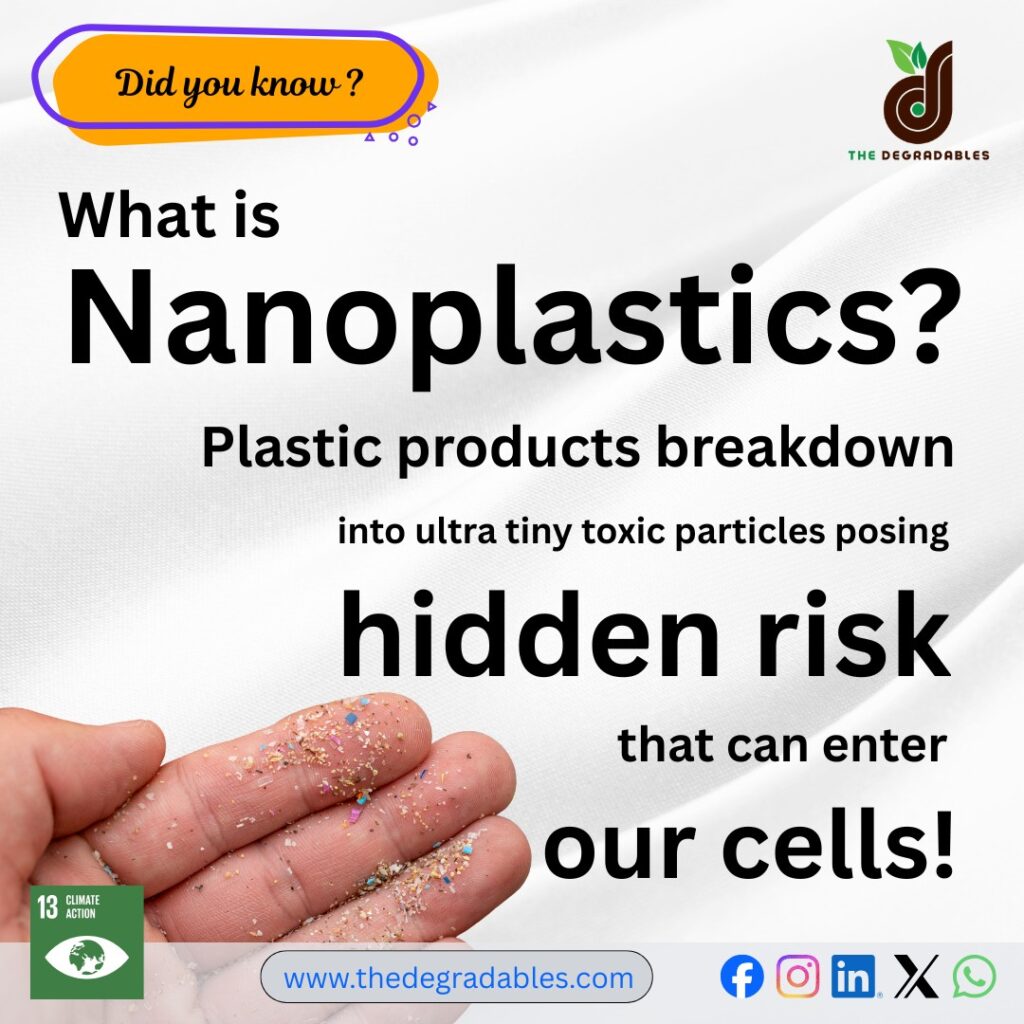
Nanoplastics are very tiny pieces of plastic that are smaller than 1 micrometer, which makes them too small to see with our eyes. They form when larger pieces of plastic break down due to things like sunlight, weather, or wear and tear. These tiny pieces often come from sources like cosmetics, clothes, or old waste. Because nanoplastics are so small, they can get into living organisms, including humans, and can contaminate air, water, soil, and even the food we eat.
Nanoplastics can be harmful to both people and animals. They can enter our bodies through breathing, eating, or touching our skin. Once inside, they might cause problems like stress on our cells, inflammation, and even damage to DNA, which can lead to serious health issues over time. Even though some studies, like those from the FDA, haven’t found direct risks at low levels, it’s still a concern. For wildlife, nanoplastics can interfere with their growth, reproduction, and overall health, and they can accumulate in the food chain, affecting humans who eat contaminated seafood.
Once they are in the environment, nanoplastics can stick to other materials, float in the air, or travel in water, often ending up in far-off places like polar regions or deep oceans. They can group together to form larger pieces that settle in the mud, but they can also stay suspended in water, making their way into food chains and staying there for a long time. Regular plastics don’t completely break down; they just get smaller and smaller over many years, while truly biodegradable materials can break down into harmless things like water and carbon dioxide under the right conditions. Some new types of biodegradable plastics may fully break down in soil or water, but most plastics stick around for a very long time.